Trading Psychology
Understanding Trading Psychology
Most traders learn a strategy long before they can follow it. The gap between knowing what to do and doing it is trading psychology.
What trading psychology is
Trading psychology is the way emotions and habits influence decisions made under uncertainty and with money at risk. It is not about being emotionless. It is about noticing what you feel and still following your plan.
The common patterns
- Fear. Hesitating on a valid setup or exiting early.
- Greed. Oversizing, or holding past the plan.
- FOMO. Chasing a move that has already happened. See How to Control FOMO When Trading.
- Revenge. Trading to win back a loss. See Why Traders Revenge Trade.
- Overconfidence. Loosening the rules after a few wins.
- Overtrading. Trading from boredom instead of from a setup.
Why a process helps
A written process moves decisions out of the moment. When the steps are decided in advance, the question during the session is no longer "what do I feel like doing?" It becomes "are the conditions in my plan present?"
That question has a yes or no answer, and it is much harder for emotion to argue with.
Losses are part of it
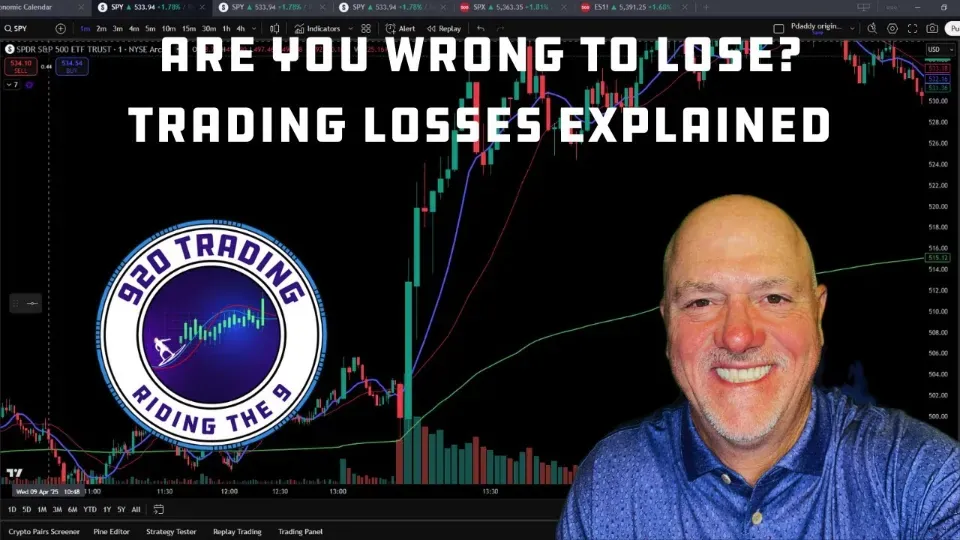
Losing trades are unavoidable. A trade that followed the plan and lost is not a failure of discipline. Judging yourself by execution, and not by the result of any single trade, is one of the most useful shifts a trader can make.
Habits that build discipline
- Prepare before the session. Levels marked, plan written.
- Use a checklist for every entry.
- Define risk first, before thinking about reward.
- Journal both the trade and how you felt.
- Review weekly. Look for patterns in your behavior, not just your results.
- Talk to other traders. Hearing that others face the same struggles makes them easier to manage.
Discipline is built through repetition. It grows slowly, and it is the part of trading that every other part depends on.
Related video
Trading Psychology
What If Losing Trades Aren't Failures? A New Perspective on Trading
This article is educational content, not financial advice. Trading and options involve substantial risk and are not suitable for every investor. 920 Trading provides educational content and community resources and does not guarantee trading results.